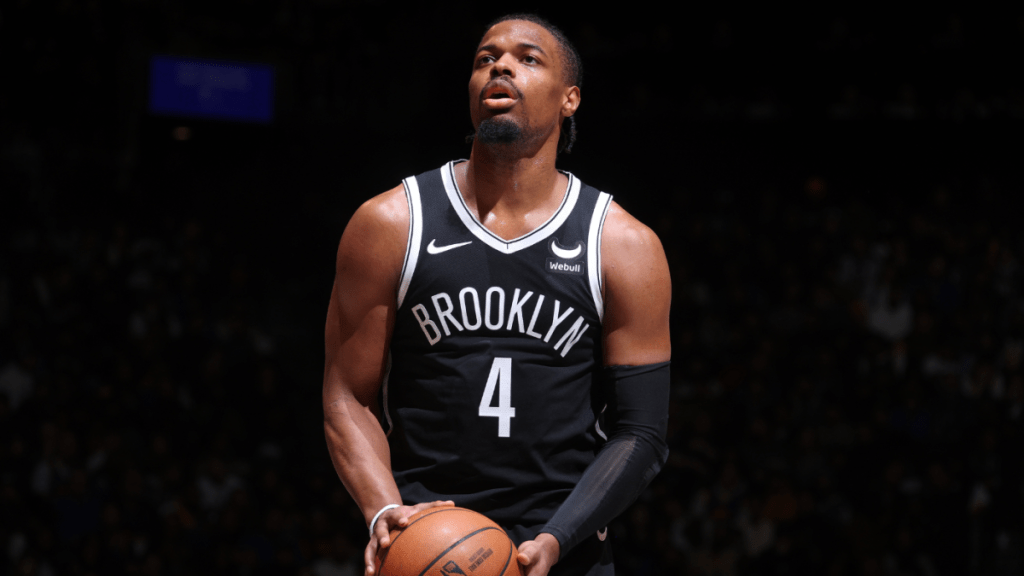
We are now a little over a month into the 2024-25 season, and we’re starting to get a good feel for the level different teams and players are operating at this year. Uncharacteristic hot and cold streaks are beginning to end, but the sample size is remains small enough where some guys are still on insane heaters through 13+ games. Here are six of those over-performers and a verdict on if their exceptional play is for real.
Buddy Hield
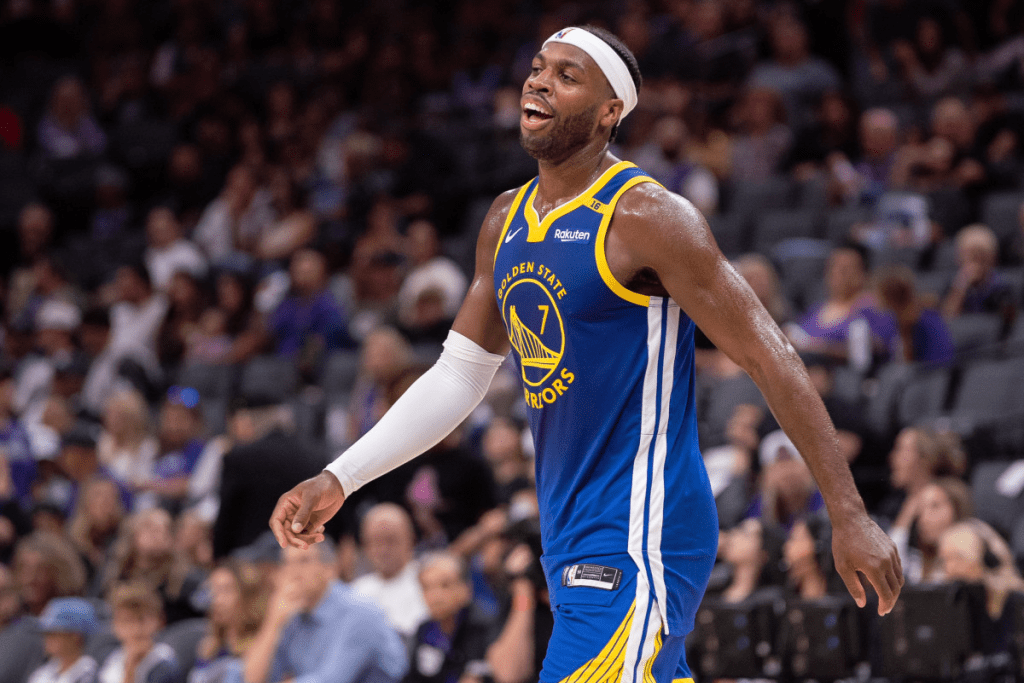
Buddy Hield is the early favorite for Sixth Man of the Year and it isn’t particularly close. He’s been absolutely en fuego through his first month as a Warrior, filling it up from downtown and leaving nets sizzling in his wake. Hield has always been one of basketball’s elite shooters, but he’s on another level right now. Because of the absurd rate at which he’s knocking down triples (46.2% on 8.0 attempts per game as of the writing of this article), his overall production feels unsustainable. However, it’s more likely that Buddy keeps balling than you would think. Why? Nothing about his process suggests regression. In fact, the opposite is true. The righty sniper is a dream fit in Golden State’s movement-based offensive system. He was born to play their style of ball. He’s going to be getting the same type of looks all year, and he’s going to keep cashing them in. You should buy Buddy Hield being a new-age Splash Bro— or a Splash Buddy, if you will.
Verdict: Buy
Norman Powell
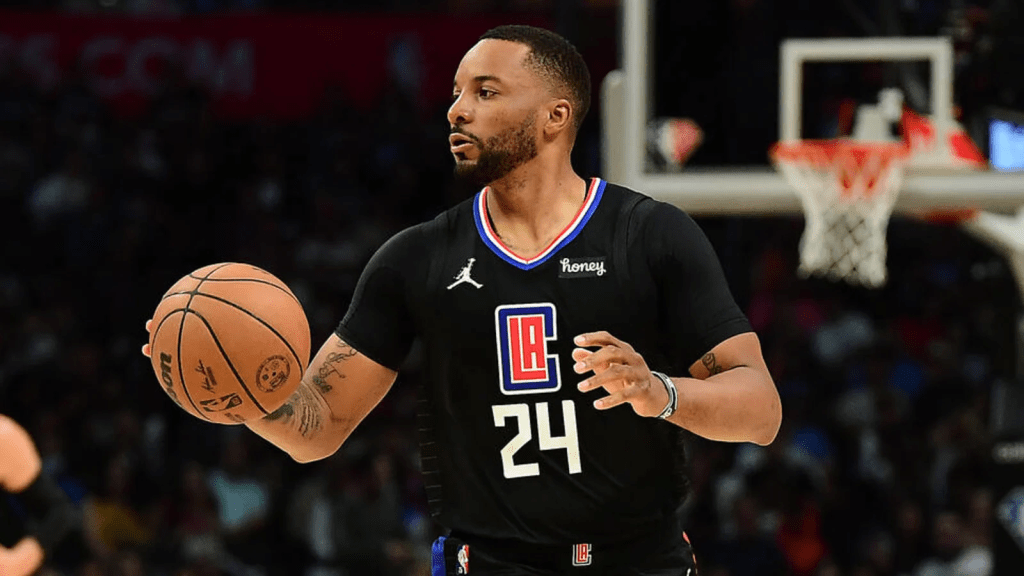
Talk about shooters who can’t miss this year— Norman Powell has turned into a human flamethrower. He’s averaging well over 20 points, pacing the Clippers in that category, and he’s backing up all the comments he made when Paul George left in free agency this past summer. Many are putting the 31-year-old in Most Improved Player talks, speaking to just how impressive his scoring has been. Powell has always been a bucket, but can he maintain this All-Star level of play? Probably not. Nothing about the veteran wing’s game has actually gotten better. He’s simply just going nuclear in a bigger role, and that role isn’t set in stone with an eventual Kawhi Leonard return on the horizon. Plus, his shooting success has been just too crazy to be maintained (48.7% from three on 7.9 attempts per game).
Verdict: Sell
John Collins
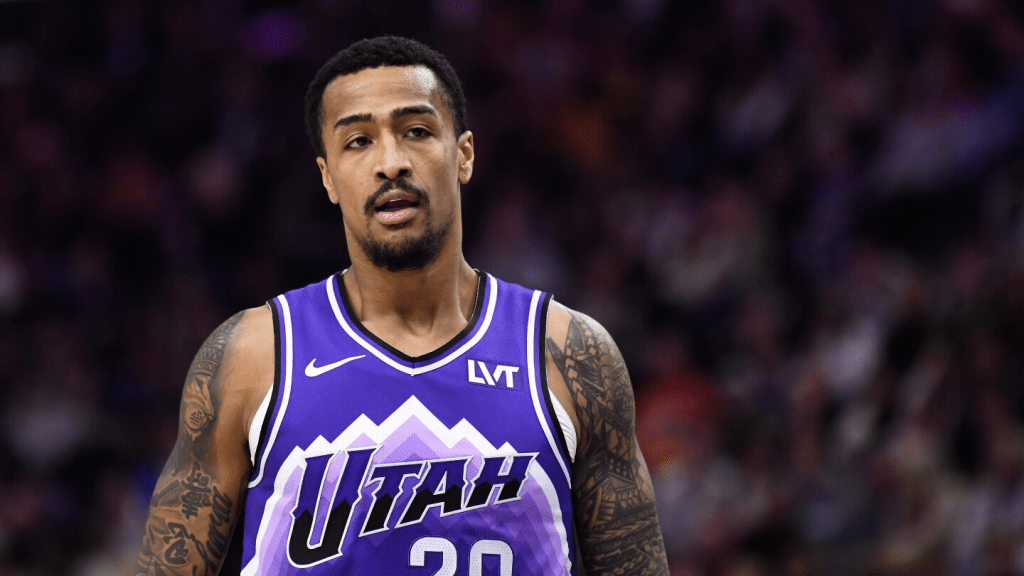
In the midst of what’s been a largely irrelevant season from the rebuilding Utah Jazz, John Collins has quietly been having a resurgence. While he isn’t quite the explosive athlete or lethal deep threat he used to be, he’s replaced what he’s lost in those categories with smarter, more well-rounded play on both ends of the floor. Many nights, he’s been Utah’s best player. That being the case for the remainder of this year is tough to buy. However, Collins could help a playoff team a lot and he’s a guy to keep an eye on when the trade deadline rolls around.
Verdict: Sell
Toumani Camara
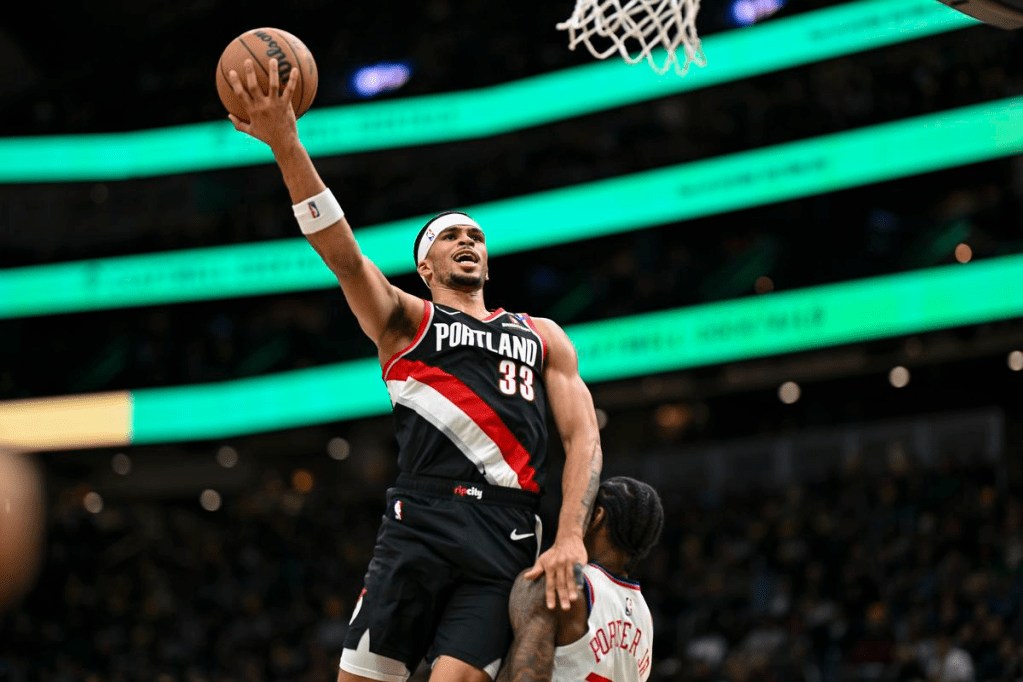
This young man’s season hasn’t been as flashy as other names on this list, but it’s worthy of attention. As a rookie in 2023-24, Toumani Camara was one of the most underrated defenders in the sport. Now, he’s added another layer to his game: a 40% three-point shot. He’s looked extremely comfortable letting it fly from outside and as a result, the former second-round pick has become a full-time starter for the Portland Trail Blazers. Camara wasn’t supposed to be an efficient perimeter shooter this early in his career, so it wouldn’t be surprising to see his percentages drop over time. Even if that does happen, though, you should invest in as much Toumani Camara stock as possible. He’s the next Herb Jones. Bookmark it.
Verdict: Buy
Malik Beasley
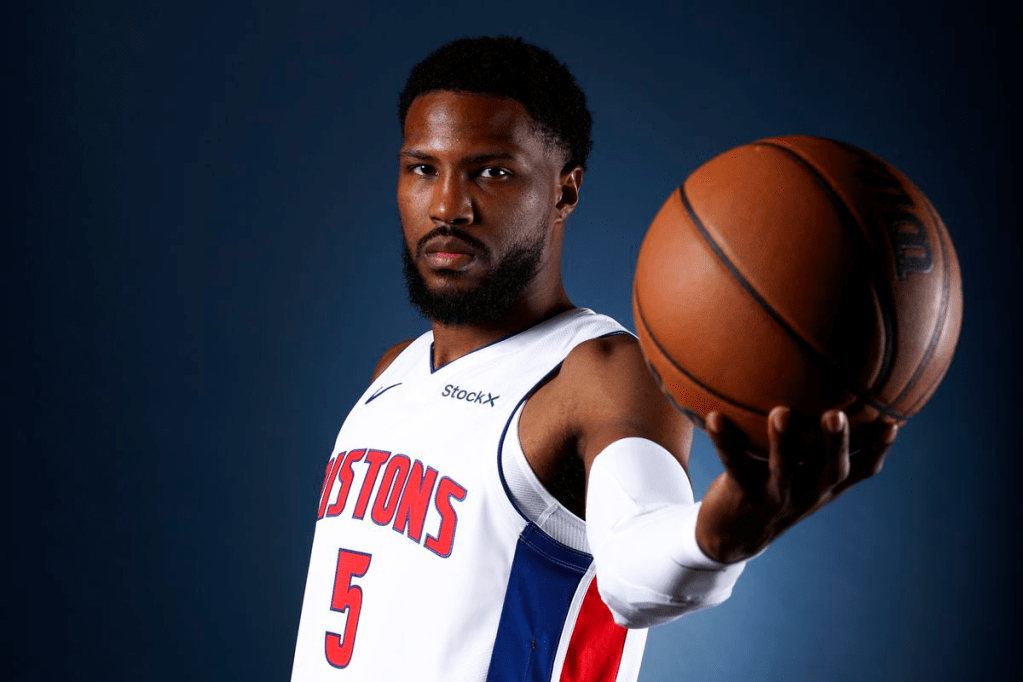
Back in September, we wrote about how Malik Beasley could make the Pistons better this season. He’s been more valuable for this team than even we could have imagined. The marksman has scored 20+ points in his last five games (as of the writing of this article), contributing big time to Detroit’s surprising competency. Despite having a 19.6 PPG campaign under his belt, it’s unlikely that Beasley continues to operate at this high of a level. That said, though, coach J.B. Bickerstaff can still lean heavily on his vet as he’s proven to be a reliable presence night in and night out.
Verdict: Sell
Jordan Poole
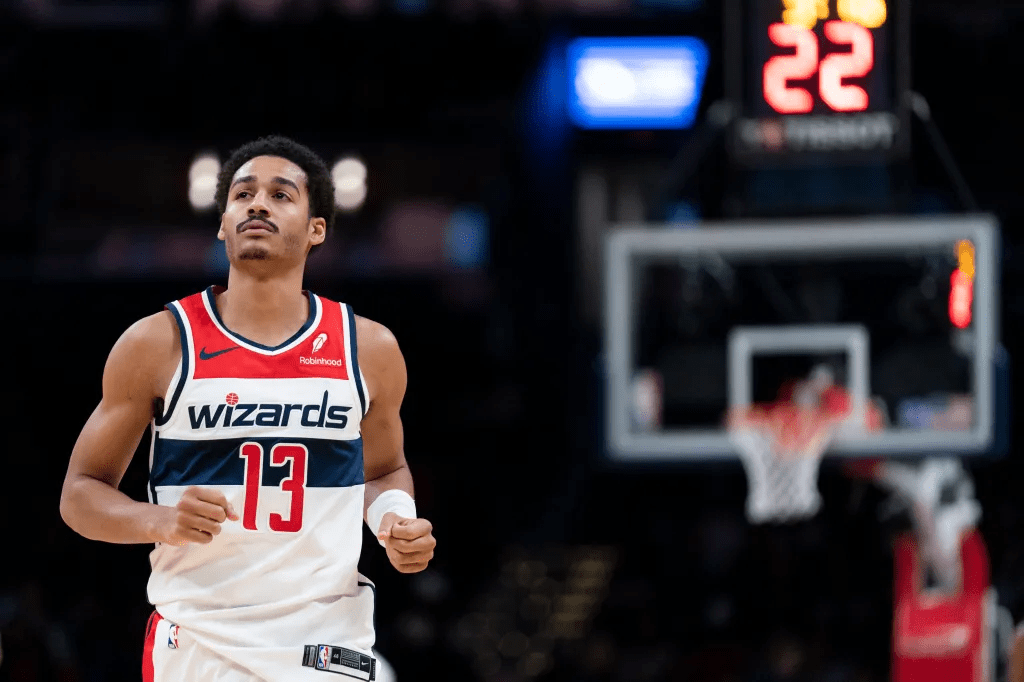
After what was an incredibly disappointing first season in Washington, Jordan Poole is now back and better than ever. Not only is he confidently hosting Poole Parties once again and getting buckets in flurries, he’s taken massive strides as a leader. He’s improved defensively, showing he’s willing to take pride in doing what it takes to win games. He’s also been a mentor for other young Wizards like Bilal Coulibaly, taking them under his wing and helping them flourish. This is a matured version of Poole, the version people saw him growing into back during his Golden State days. This is who Jordan Poole is supposed to be.
We are less than a month into the 2024-25 NBA season and the New Orleans Pelicans already wish they could start over. Almost every major rotation player they have, besides Brandon Ingram, has been slated to miss significant time with injury. They continue to sink deeper and deeper below .500 and it doesn’t seem like they’ll be getting back up for air anytime soon.
In the midst of the apocalypse, there is one young man who has emerged as a hero. He’s no savior— it would take more than a miracle to save this team. He is, though, someone who Pelicans fans can rally behind as a light amidst the storm, a glimmer of hope when all seems lost. This brave warrior isn’t the aforementioned Ingram, or Yves Missi, the thunderously impressive rookie. It’s someone much more unsuspecting— the Bilbo Baggins or Neville Longbottom of this story.
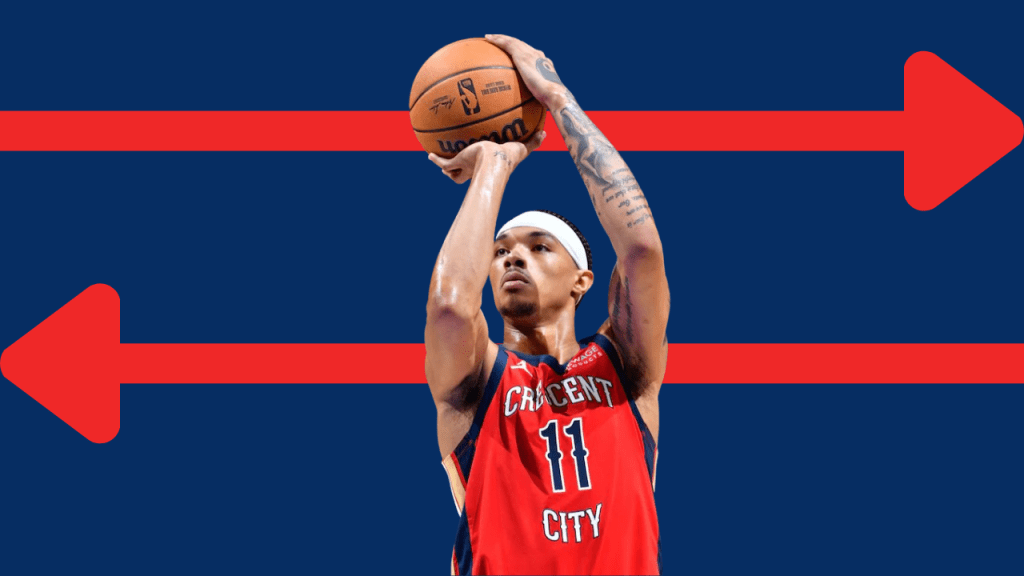
Welcome back to Two-Way Talents! This series highlights two-way contract players across the association that are balling out and staking a claim for a bigger role. The goal is to give unknown players the attention they deserve. In the first installment of the new season, we’ll be talking about Brandon Boston Jr., the fourth-year wing who has made a winning hand out of the awful cards his team has been dealt.
Boston was once one of the most hyped prospects at his age. He was a McDonald’s All-American in high school and a top recruit who ended up at the renowned University of Kentucky. Unfortunately, he underperformed in his single year in college and slipped all the way to the 51st pick in the 2021 NBA draft. He joined the Clippers where he was an afterthought in the rotation for three years, stuck behind Kawhi Leonard, Paul George, and company with no way to unleash the talent buried within him. After being cut from the Spurs training camp roster this past offseason, he was nearly out of the league until the Pelicans rescued him off waivers.
It’s safe to say New Orleans is very glad they did so.
As a result of all the injuries, Boston has become a de facto starter and he has absolutely flourished in the new opportunity so far. Finally being able to play big minutes and play through mistakes has allowed him to begin to realize the potential he has. He’s filling up the scoring column to the tune of a career-high 11.6 points per game and showing he can affect the game in other ways, too. Let’s dig into the tape and learn more about what he can do.
The first thing that jumps out about Boston’s game is that he’s a super advanced scorer for a guy who has played so few real NBA minutes. He can put the ball in the hoop from all three levels and he does it with the craft and prowess of a star. He handles the rock on a string and can create space and get to his spots whenever he wants. When New Orleans lost Zion Williamson and CJ McCollum to injury, they lost a ton of creation and Boston has picked up some of that slack. He loves pullup jumpshots, especially from the mid-range. His game is not analytically friendly for that reason, but it doesn’t matter because teams need to have guys on the floor who can go make plays and get a bucket. That’s what Boston has been for the Pels in their time of need.
The most surprising part of Boston’s breakout November has been his passing. He’s a score-first player, and prior to this year, 1.0 was his career high in assists per game. However, now that he has the ball in his hands more, he’s shown a level of unselfishness that has made him a legitimately viable secondary creator. In a game on November 11th versus Brooklyn, the young wing shot just 3-13 from the field, but he dished out a career-best 10 dimes. He knows how to find the right balance between getting his own and helping others do their thing, and that sort of IQ will keep him in an NBA rotation even on a fully healthy roster.
Defensively, Boston has been a disruptive thief, leveraging his near seven-foot wingspan to grab well over two steals per 100 possessions. He’s adept at using that length to poke around in the passing lanes and break up actions. His STL% so far is up there with established stoppers like Jalen Suggs and Shai Gilgeous-Alexander. This is a new development to his game, so time will tell if it’s a fluke or not.
Brandon Boston Jr. is one of countless examples of how much opportunity and situation matter in the NBA. There are countless players across the league who are waiting in the shadows, grinding in silence and staying ready for when their chance comes. Boston is getting his shot now, waking up anyone who slept on him, and he serves as a reminder to all that talent can be found anywhere if you look hard enough.
One of the smartest things a rebuilding team can do is take a chance on young guys. Specifically, ones who were high-upside first round picks who haven’t panned out yet but are still young. Situation matters so much in the NBA, and a change of scenery could be all it takes for a player to come into his own. For example, the Jazz brought in Lauri Markkanen and turned the former 7th overall pick from a quality stretch four to a bonafide All-Star. The Raptors acquired RJ Barrett and the hometown kid is playing the best ball of his career.
There are multiple reclamation projects finding success so far in the 2024-25 season. Here are three of them.
Ochai Agbaji
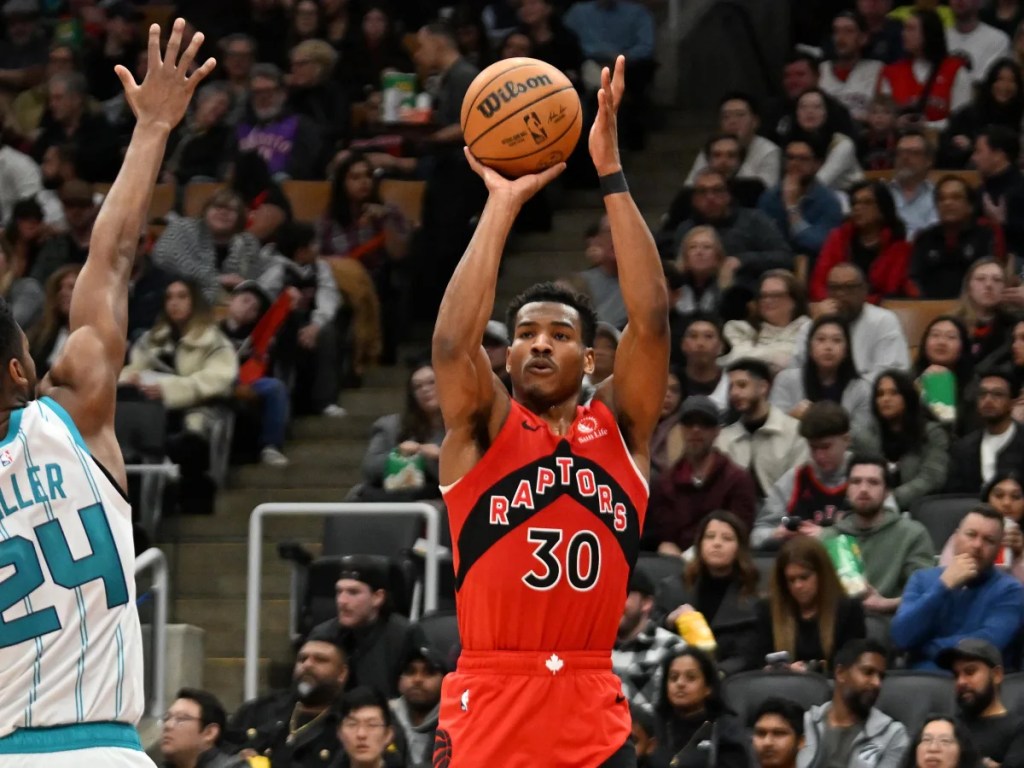
Ochai Agbaji was considered one of the surest things in the 2022 draft class. Coming out of Kansas, he was a complete package, someone who seemed ready to play big minutes right away as a rookie. Through his first two seasons, though, he struggled to make any sort of positive impact. The Jazz weren’t that impressed with him and included him as a throw-in in a trade they made at the 2024 deadline.
Now in Toronto, Agbaji is becoming the player he was supposed to be. He’s started multiple games in place of injured openers and has looked great on both ends. He’s become a defensive stalwart, a development that started to come to light in his sophomore campaign. He uses his 6’10” wingspan to be a wreckful stocks guy who polices the passing lanes and delivers chasedown swats. The Raptors have always had an affinity for lengthy wings and know how to maximize that archetype so it makes sense that Agbaji is popping, especially on D.
Shooting was Agbaji’s biggest strength collegiately, but he hadn’t found much luck from behind the arc as a pro before this season. However, his new role has clearly restored his confidence and he is back to being a sniper. He’s hit well over half of his corner threes so far. The young wing is also a super effective finisher, clever cutter, and dynamic transition threat, making him an ideal off-ball player overall.
Once Scottie Barnes and Bruce Brown are back healthy, Ochai Agbaji’s playing time may decline, but he’s proving that he deserves to be in the rotation full-time.
Josh Giddey
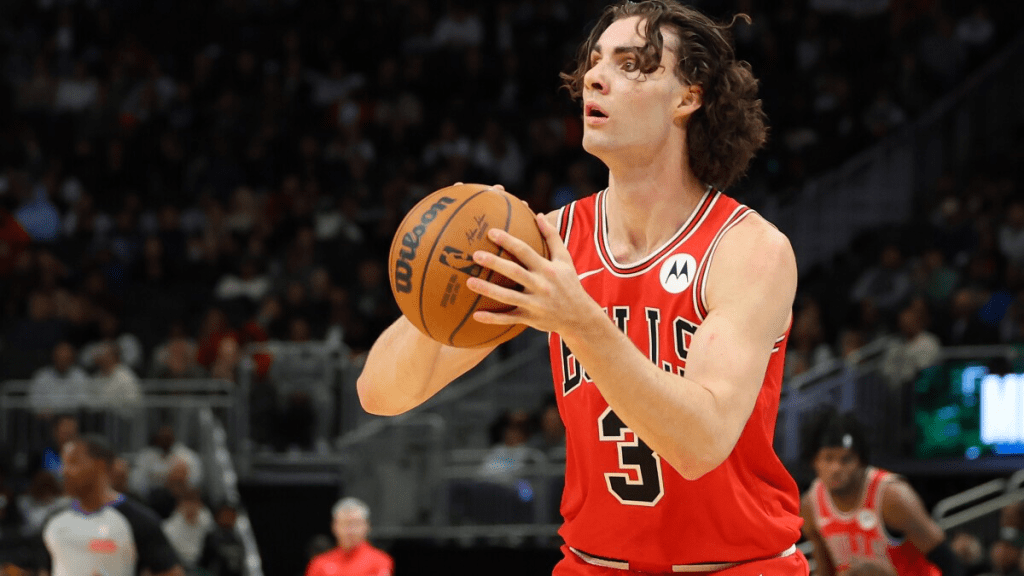
2023-24 was a brutal season for Josh Giddey. The Thunder skyrocketed into contention and he was simply not ready to play that level of basketball. He was still a talented player with high upside, but many people started to forget it. After all, it’s tough to watch a guy look like a total liability on both ends and still believe in him. When he was traded to Chicago, though, real Giddey truthers rejoiced as it was clear that he was going to a much better situation for his development. Their faith is being rewarded so far as the Australian has thrived in his new environment.
The Bulls have played at a rapid pace this season, launching a ton of threes and modeling modern playstyles in a way they never did during the DeMar DeRozan era. Giddey has looked at home playing this way. He’s been in peak passing-wizard form, freely letting flashy dimes fly at fantastic rates. He’s quickly found synergy with Chi-Town’s resident All-Stars, getting easy looks for Nikola Vucevic out of the pick-and-roll and encouraging Zach LaVine to zip around the court as a cutter. It feels like no coincidence that so many Bulls are shooting so well from deep with Giddey as the primary playmaker. The young guard has even joined into the three-point party himself, looking much more willing to shoot off the catch and connecting on over 40% of his tries.
The biggest problem for Giddey, of course, lies on the defensive end. At this point, expecting him to be a good defender is a recipe for disappointment. He has, however, made some nice plays with his hands on D this year, an encouraging potential development. All he has to do is not be a complete sieve, and that’s a doable goal that would go a long way for him if achieved.
At this point, it’s almost certain that Josh Giddey will never be a star. But, he is still a good player in the right scenario, and the man they call the “SLOB Wizard” is making that statement in Chicago.
Ziaire Williams
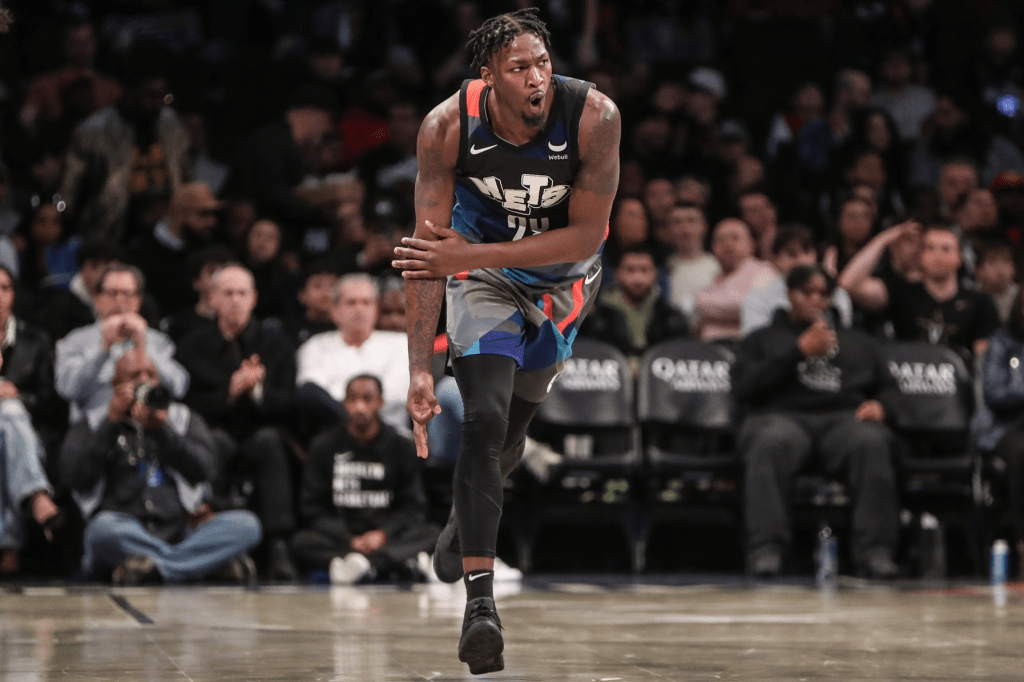
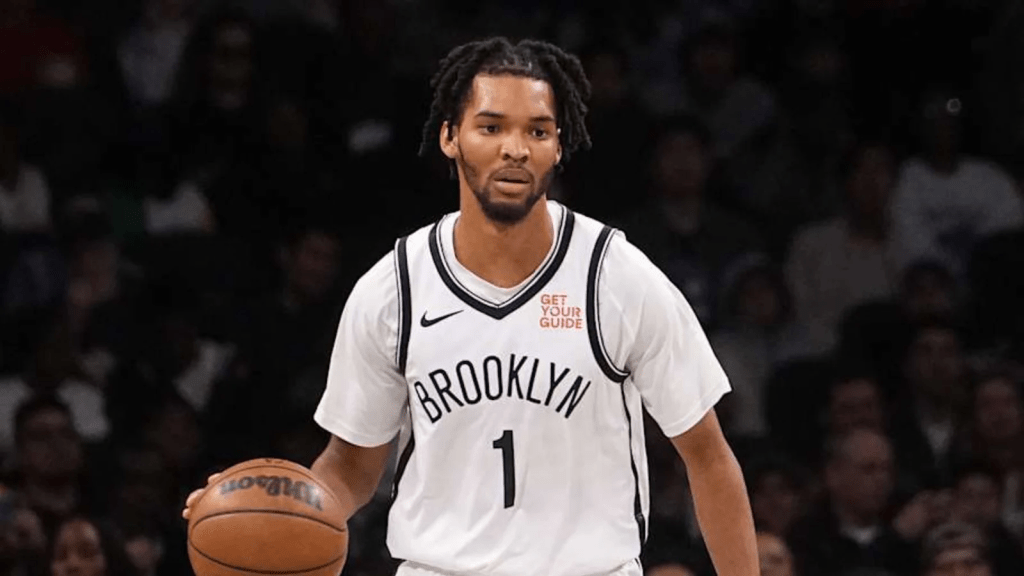
When the Grizzlies selected Ziaire Williams 10th overall in 2021, the pick was criticized. His college production was less than stellar and he was incredibly raw. Unsurprisingly, as most half-baked prospects do, he underperformed during his first few years in the league. Memphis desperately wanted him to be the answer to their wing problems and he just wasn’t the guy they hoped for. For that reason, nobody thought much of his arrival to Brooklyn this past summer other than “wow, what an unfortunate career it’s been for him”.
The Nets clearly knew something we didn’t when they brought Williams in and they should be applauded for it. The kid has turned from a blank canvas to an eye-catching painting. He’s finally found a role for himself in the most popular archetype of today’s league: 3&D. The Stanford product always showed flashes of shooting touch, but his shots are now actually falling at a high rate for the first time. His inefficiency from downtown was the main thing holding him back, as non-shooters have a tough time gaining footing in the modern NBA. Defensively, he’s been a pest on the wing, switching onto multiple positions and disrupting with his length.
Williams has completely changed the trajectory of his career this season. At just 23 years old, he could be a long-term core piece for the rebuilding Brooklyn squad.
“Which young player is going to make the biggest jump?”
“Who will make their first All-Star game?”
These questions run rampant on NBA social media during the offseason. Everyone wants to predict who will be the next player to make an unexpected jump, or to take the step from being a good player to being a star. It hasn’t taken long for some of those breakout players to show themselves in the newly commenced 2024-25 season, and some guys are turning into bonafide all-league talents right before our eyes. Let’s talk about two of them.
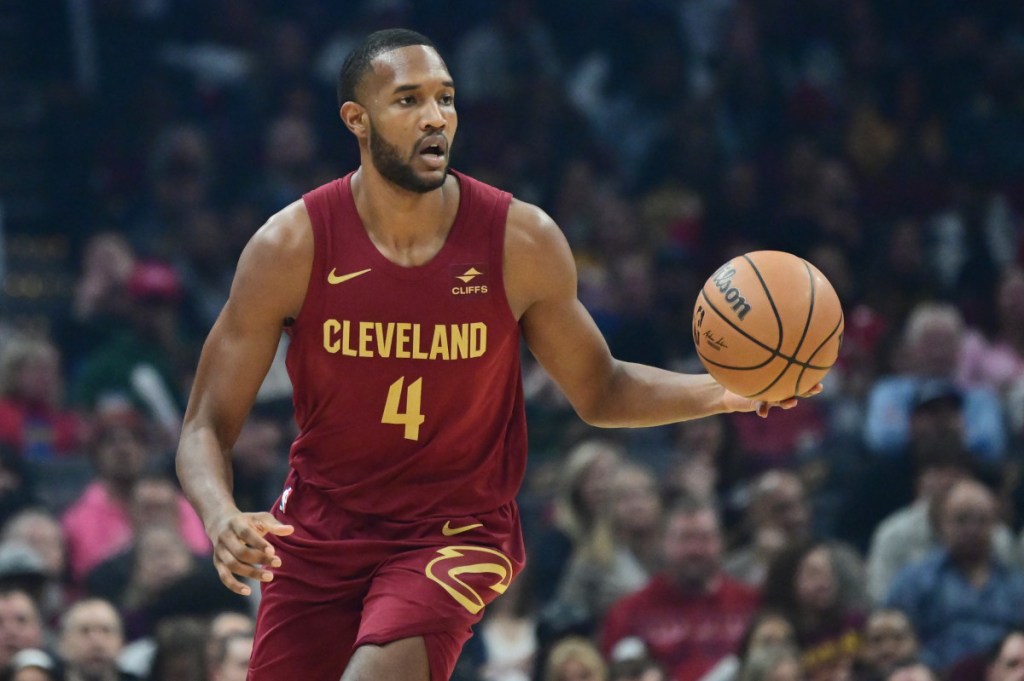
Evan Mobley
Evan Mobley was a special prospect. His draft night comparisons were (rightfully) lofty, and his rookie season proved to be grounds worthy of calling him the next Kevin Garnett or Anthony Davis. The USC product was a Defensive Player of the Year finalist by his second year in the league. Heading into 2024-25, though, his growth hit a sort of plateau. His output, statistically at least, was very similar throughout his first three NBA campaigns. Nothing wrong with consistency, but people wanted to see more.
We are now seeing more.
Through the first week of the new season, Evan Mobley has been one of the most impressive players relative to his status. He’s playing with heightened confidence and making a star-level impact in multiple ways. Jarrett Allen is still very good and highly underrated, but it’s safe to say Evan Mobley is on the brink of becoming the second best player on this Cavs team.
What’s different about the way Mobley is hooping? His improvement has been the most obvious and significant on offense. New head coach Kenny Atkinson has empowered him more than J.B. Bickerstaff ever did. The big fella is playing a more outside-in based style of ball and it’s making him into an incredibly dynamic weapon. He’s letting the three-ball fly more willingly than ever, even hitting pullups. If he can become a respected threat from outside, his game and Cleveland’s offense will become much more dangerous.
More importantly than the shooting, though, Mobley has looked unafraid and aggressive in putting the ball on the floor and getting to the rack. We’re seeing him take the ball coast-to-coast and euro step into scoop layups. Even in the age of hypertalented bigs, that is not normal for a guy of his size. The young star has been barreling into the chest of defenders and shedding off contact like it’s nothing. As a result, he’s getting to the free throw line more often than before.
Mobley’s creation burden has been higher than ever so far— he’s getting unassisted buckets at a career-best rate. He’s also making plays for others, sucking in help defense with his aforementioned driving chops and opening up teammates. This level of skill has always been there, at least in theory— there’s a reason why he garnered the comparisons that he did coming out of college. Now, it’s finally coming to light on a night-to-night basis.
Of course, you can’t talk about Evan Mobley without mentioning his defense. He might be the way-too-early favorite for DPOY, as the Cavaliers have been excellent as a team on that end and he is the key cog of their defensive gameplan. Mobley has almost no holes in his stopping skillset. He can switch onto anybody and shut down drives. He can be the primary rim protector as a center. He’s one of basketball’s best helpside shot-blockers. No matter how he plays offensively, he’ll always be an elite player because of how good he is on D, and that fact is nothing new.
Overall, we are witnessing the jump from Mobley that we’ve been waiting for. If he keeps this up, it will be huge for Cleveland’s status and future as a team.
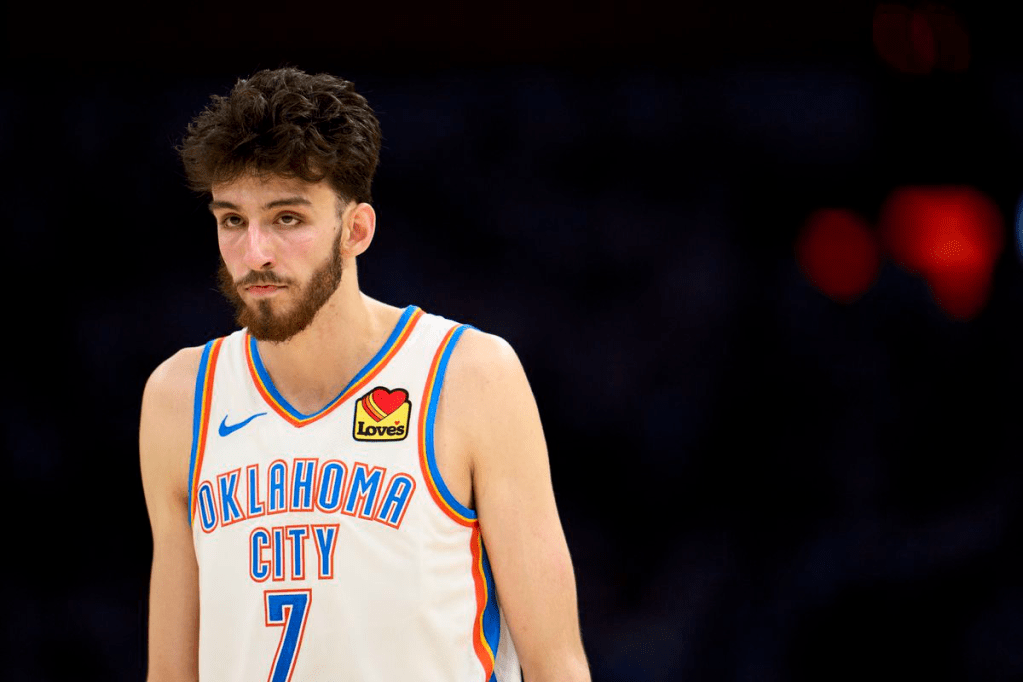
Chet Holmgren
Woo-wee. Goodness gracious. OMG. WTF?!?
All of these are appropriate reactions to how Chet Holmgren has played to start this season. The guy has looked, conservatively, freaking incredible. The Thunder have been running through their competition and Holmgren has been arguably the main catalyst to that success. He dominated three-time MVP Nikola Jokic on opening night and hasn’t let up since. If you’re looking to make a bet on who will make their first All-Star game this season, put the house on Chet.
His offensive bag is freakish in a way that can only be out-freaked by Kevin Durant or Victor Wembanyama. He’s skinny as heck but it doesn’t even matter because he has the power and bravado to put defenders into the rim when he drives. His handle is so silky for a seven-footer and he has no problem creating buckets for himself. He’s scoring like a superstar and the scariest part is that his three-ball hasn’t even started falling yet.
Holmgren’s roll man prowess and P&R chemistry with Shai Gilgeous-Alexander are off the charts. If he catches the ball around the free throw line, it’s over for the defense. He’s either effortlessly draining a middie or viciously throwing down a driving dunk. Shoutout Jalen Williams, but the Minnesotan and the Canadian are OKC’s true duo of the future, and to see them playing so well in actions together is thrilling for lovers of ball and terrifying for opposing teams hoping to win a championship in the next decade.
Holmgren was an all-world defender as a rookie and things have been no different in year two. He’s a tyrannical warden protecting the rim— he doesn’t let anyone score points in his paint. His timing for blocking shots is impeccable. He eats up so much space inside with his length and stature. Best of all, he takes pride in getting stops and wears his emotions on his sleeve.
Chet Holmgren spent his rookie year in the shadow of Victor Wembanyama, but right now he looks on par with his extraterrestrial peer. His play has been sensational and he’s sending the message that he’s going nowhere. Holmgren will be a commanding force in the West for years to come.
It’s the most wonderful time of the year— the NBA is finally back! Two fantastic games are on the slate for opening night, with the Knicks taking on the reigning champions, the Celtics, followed by LeBron and the Lakers taking on the Timberwolves. I’m as excited to watch as you are, so I’ll leave the intro at that. Here are three things I’ll be watching for from each team playing tonight!
New York Knicks
1. Brunson-KAT synergy
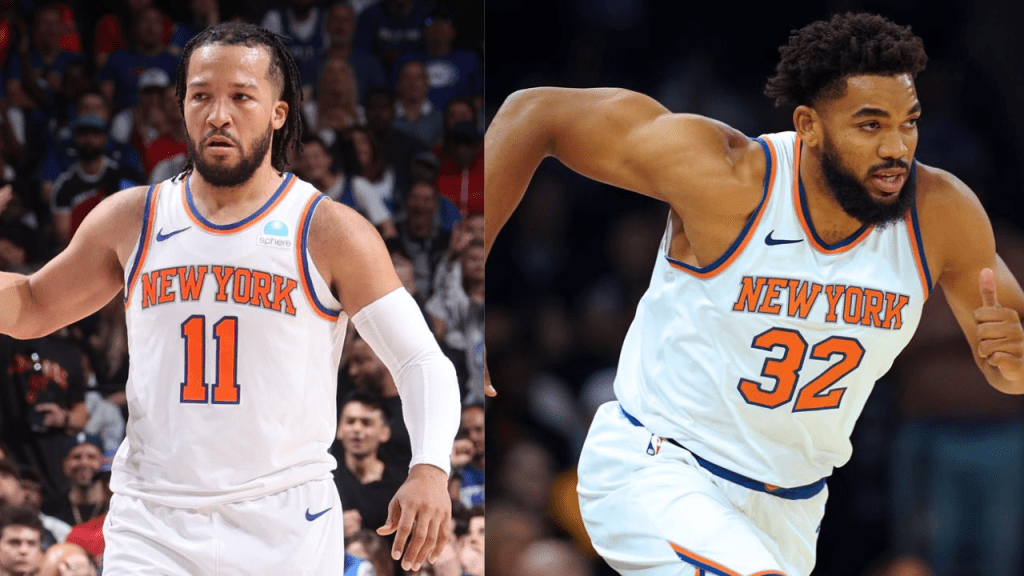
New York acquiring all-league big man Karl-Anthony Towns was one of the biggest stories of the offseason, and tonight, he’ll make his official debut for his new squad. The most important part of his fit on the Knicks will be his chemistry with Jalen Brunson. There is no doubt that their two-man game will be lethal. Both stars will open up space and shots for each other and their pick-and-rolls are sure to give opposing defenses nightmares. However, to win a championship, the Brunson-KAT duo will need to be dominant, as the East is better than ever. Tonight we’ll get an idea of just how scared the league should be of this pairing.
2. Who steps up off the bench?
The Knicks added significant starpower over the summer in Towns and Mikal Bridges (as well as OG Anunoby at last year’s trade deadline), but in the process, they sacrificed a significant amount of depth. Especially in the absence of Mitchell Robinson and Precious Achiuwa, this team’s second unit is made up largely of unproven youngsters. Tom Thibodeau is notorious for running tight rotations, but depth still matters, and at least a couple bench players will need to step up and prove to be worthy of consistent minutes. The betting favorites to do so are Miles McBride, the sparky two-way guard who played big minutes in the 2024 playoffs, and Cam Payne, the crafty veteran. However, New York is shallower at other positions besides guard. There is a lot riding on Jericho Sims eating up center minutes effectively until Robinson and Achiuwa return. Raw rookie Pacome Dadiet may be thrust into the rotation earlier than anticipated as a backup to Bridges and Anunoby. Are those guys up to the task?
3. Mikal Bridges’ defense
Once a Defensive Player of the Year finalist, Bridges has taken a step back in terms of his defensive reputation. His effort and impact on that end fell in Brooklyn as his offensive responsibility skyrocketed. Now back to playing a smaller, complementary role, can he return to his Phoenix form on D? If he does, the Knicks could have one of the best defensive duos in basketball between him and OG Anunoby.
Boston Celtics
1. No Porzingis, no problem?
Boston’s resident unicorn Kristaps Porzingis is slated to be out of the lineup until December as he rehabs from an injury. Until then, the Celtics have a seven-footer-sized hole they need to fill. Old man Al Horford has proven to still be very capable of being a spot starter, but his body can only handle so much and Joe Mazzulla undoubtedly would like to preserve the best version of the former All-Star for the playoffs. Therefore, Luke Kornet and Neemias Queta will be looked towards to pick up some of the slack. Kornet is the safer option, as he has played big minutes for the team in the past. Queta, though, is much more intriguing. The Portuguese center is a monstrous shot blocker and lob threat. Regardless of which guy plays, how good they are will matter for the Celtics until they get Porzingis back.
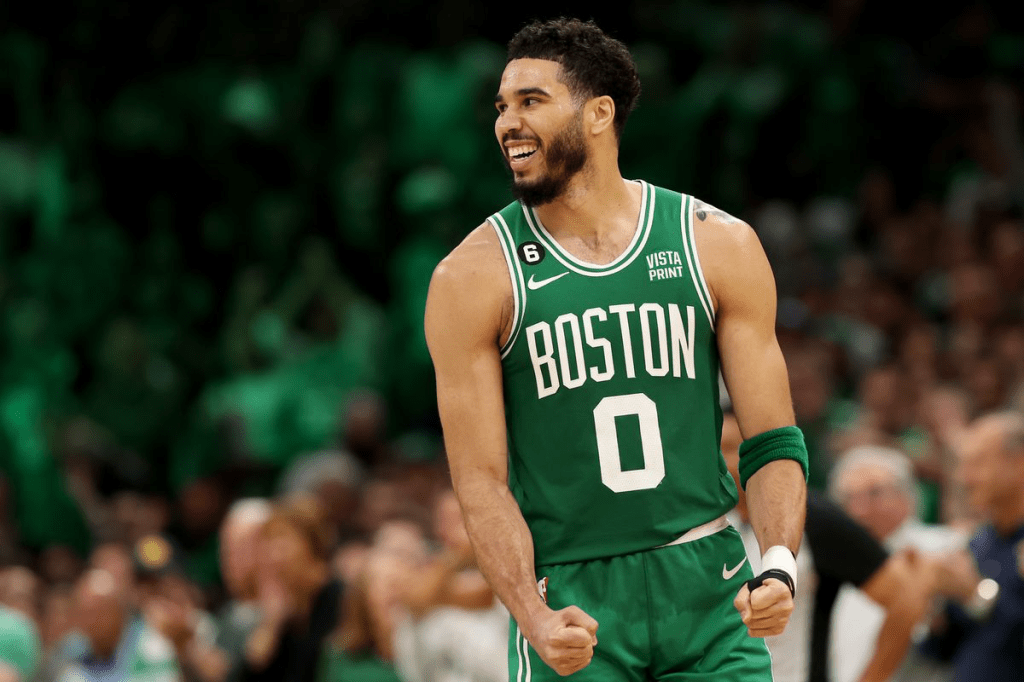
2. Jayson Tatum’s jumper
It’s no secret that Tatum struggled big time as a jump shooter in the playoffs. He connected on just 28.3% of his triples during Boston’s championship run and has been ridiculed for it by fans. To reestablish himself as one of the best players in the world, he needs to find his stroke again. In preseason, his signature hitch looked smoothed out, so he’s clearly been working on his shot. Time will tell if the results come to light in the real season.
3. Do any young guys play?
Since they’re so stacked at the top of their lineup, Boston usually only goes deep in their bench if they’re in a blowout. However, their reserve group features some intriguing youngsters including former first round pick Jaden Springer and 2023 draftee Jordan Walsh. Those guys could prove to be diamonds in the rough if they get any chances to play minutes for the champs.
Minnesota Timberwolves
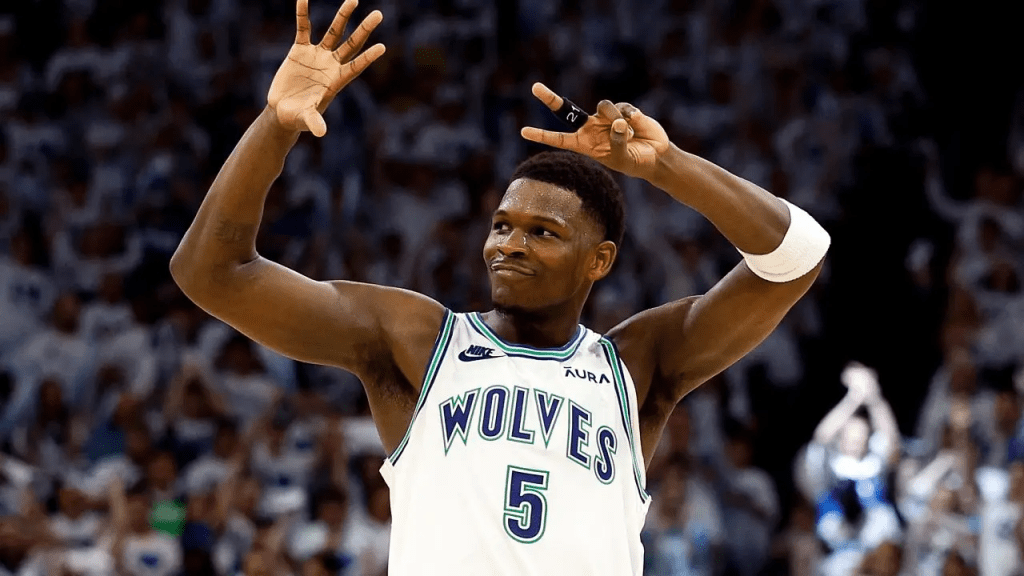
1. Ant supremacy
Anthony Edwards is the chosen one, the heir apparent to the NBA throne as the next generation of stars rises. He’s gotten better and better every year, but he still has leaps to make if he’s to live up to the hype around his name. It would go a long way for Minnesota’s title hopes if Ant looked like the best player on the court night in and night out this season, and tonight is the perfect night for him to assert his dominance and begin a potential MVP tour as he takes on two Hall of Famers.
2. Randle in action
Julius Randle is one of the most heavily criticized and disrespected stars in the sport, so it’s no surprise that the media was quick to pile on his fit in Minnesota when he landed there in September. However, there are many reasons to be optimistic about what he can bring to his new team, and tonight he can begin to prove doubters wrong with the eyes of the entire NBA world on him. For more thoughts on what role Randle could play for the Wolves, check out this article after you finish this one!
3. Garza minutes?
This one is for the sickos. Former college superstar Luka Garza has stuck in the NBA when many thought he couldn’t, but he has yet to crack a rotation despite the truly insane production he’s had in his limited burn. With Karl-Anthony Towns gone, there are big man minutes for the taking in Minnesota. Can Garza snatch them up? He certainly looked capable of doing so when he dropped 29 points in a preseason game versus Denver.
Los Angeles Lakers
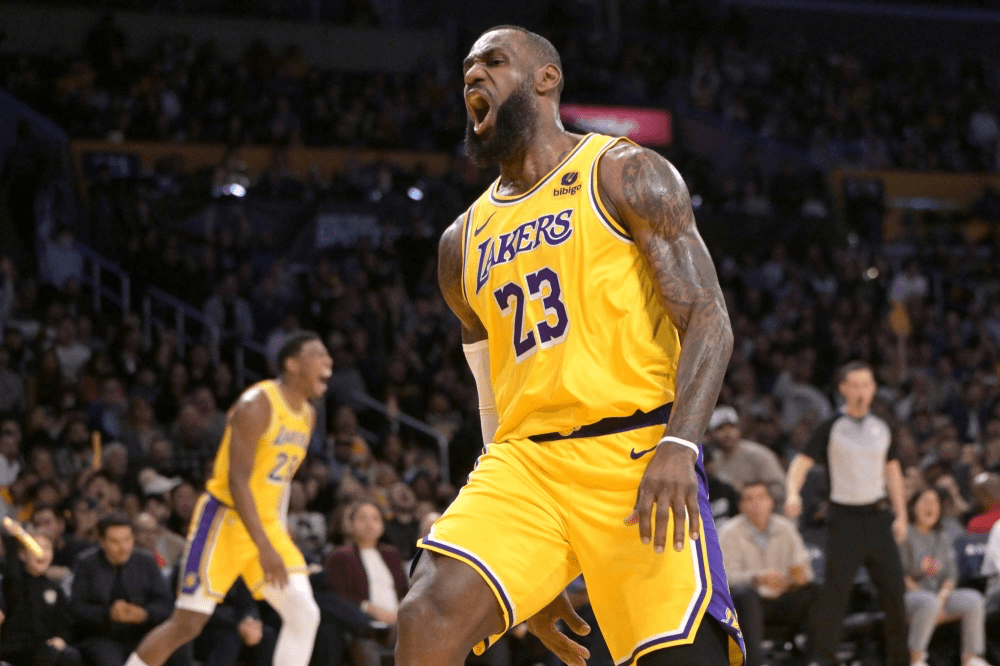
1. LeBron James, the eternal
The King is entering his 22nd NBA season, a milestone that ties the all-time record, and he still looks as good as ever. Every season seems like it might finally be the one where cracks form in the armor and James starts to decline, but it never happens. So, there’s no reason to believe that this year will be the one. Expect LeBron to come out still playing like the GOAT and enjoy it while he’s still around.
2. Dalton Knecht, JJ Redick disciple
New head coach JJ Redick is one of the best movement shooters ever, and he’s been given a baby version of himself to mentor in Dalton Knecht. The Tennessee product looked incredibly confident in summer league and preseason, and he’s ready to play minutes right away. Redick is going to cook up some disgusting sets for the young sniper and it’s going to be awesome.
3. Overall schemes, coaching, and identity
JJ Redick is an incredible basketball mind, but he’s never coached professionally before. What he does to maximize this Lakers team on both ends will be super interesting to watch, as this roster has the personnel to operate at a playoff level on both ends. What identity will they take on? Who makes the nightly rotation? How good is Redick on the whiteboard? These questions will need to have good answers to make the most out of the rest of LeBron’s career.
The Philadelphia 76ers underwent a massive makeover this summer. Ten new players were brought in via free agency and the draft, with the headliner of course being future Hall of Famer Paul George. These newcomers are primed to fill many key roles in Philly’s rotation this season, with the ultimate expectation being that they can help put the team in position to finally make it to the Conference Finals and beyond.
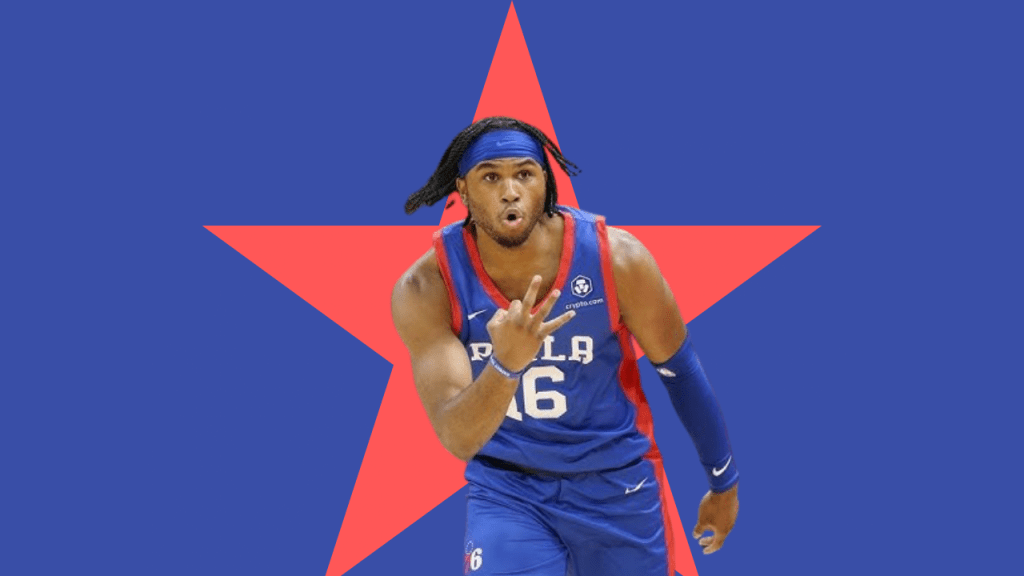
What about the returners? We know what we’ll get from Joel Embiid and Tyrese Maxey. They will steer the ship as their new crewmates row. There is another standby, though, who could play a crucial role in bringing the Sixers to the promised land. That man is Ricky Council IV.
Council, a former undrafted free agent, is coming into his second year in the NBA with a ton of positive momentum. In April, he was rewarded for outplaying his two-way status with a standard contract. At media day, Nick Nurse said Council would be a “factor” in the rotation this season. The Arkansas product is ready to go in 2024-25. Here’s why.
Offense
As a rookie, Ricky Council averaged 5.4 points in just nine minutes per game. That scales up to 21.6 points per 36 minutes, a rate that ranked behind only Embiid and Maxey among Sixers who played 100+ minutes last year. Simply put, Council is a bucket, and the way he fills up the scoring column is no fluke.
The young wing has a funky bag of scoring methods that are both flashy and practical. He knows how to utilize pump fakes to send defenders flying in a Desmond-Bane-esque fashion. He is also keen at finding backcut opportunities along the baseline and he fills lanes and runs the floor very well in transition. Further, he is an assertive catch-and-drive guy who powers his attacks by stampeding the catch and getting downhill quicker.
Another thing Council does to create easy points for himself is get to the free throw line at a truly absurd rate. Had he played enough minutes to qualify, his free throw rate of 0.634 would have ranked third in the entire NBA. He’s unafraid of contact and will go into the chest of anyone when he’s getting downhill. “He’s got an uncanny ability of drawing fouls”, head coach Nick Nurse said in an interview.
Council’s repertoire of moves is more polished than that of the average young player, and its effect is heightened by his combination of fearless, ballsy shot taking and silky shot making. He has touch at all three levels, and it shows up the most at the rim, where he hits ridiculously tough floating layups over overarching defenders. In 2023-24, he shot 63.9% at the rim, 66.7% on long middies, and 37.5% from three.
It would not be unreasonable to call Council’s scoring tape special. The kid is that talented and that confident. There are only two clear potential hindering aspects of his game, and both are relatively unconcerning. The first is that his shot diet is tough at times which means his efficiency could fall off on a higher volume. The other is that his jump shot form is a little hitchy, but that hasn’t held him back up to this point and it’s nothing offseason work couldn’t fix.
Defense
Council isn’t known for his defense, but he can pull his weight on that end and make things happen, specifically as a playmaker. He did a good job of turning defense to offense as a rookie, quickly getting out into transition after grabbing a steal or blocking a shot.
– – –
So, what will it take for Ricky Council to have a breakout year? The first thing is consistent playing time. He’ll be competing with Paul George, Caleb Martin, Kelly Oubre Jr., and Eric Gordon on the wing, and he is probably firmly behind those guys in the depth chart. However, with three of them (George, Oubre, and Martin) projected to start, there will be bench minutes available for the youngster to snatch up. Once he gets on the court, playing defense will be key for him staying on it. “He’s still got some growth to do at the defensive end”, said Nurse. Council has no shortage of athletic tools and dawg in him, and so if he channels his focus and takes pride in his defense, he could stand out for the right reasons on D.
Another development that would make it harder to keep Council out of the lineup is passing. He has shown some flashes of drive-and-kick playmaking that are very encouraging, as tunnel-vision scorers have a hard ceiling on the impact they can make. Establishing himself as a dribble-pass-shoot wing would go a long way for his future.
Overall, though, Council is all systems go for the 2024-25 season. “Ricky seems like a whole different person coming back this year… he knows what we’re doing”, Nurse said about his second-year player. When the 76ers are competing deep in the playoffs this season, don’t be surprised if Ricky Council IV is playing a big part in their success.
The NBA never fails to surprise us, and the surprises never fail to be exciting. Last Friday night we got our first big trade of the post-Woj era, with Karl-Anthony Towns heading to the New York Knicks in exchange for Julius Randle and Donte DiVincenzo (and former Bench Mob Blog All-Star Keita Bates-Diop). This deal came out of absolutely nowhere, and there is plenty to be said about it. We could talk about the implications for both teams in the standings, who won and who lost, how dirty the Wolves did Towns and how dirty the Knicks did Randle… the list of topics goes on. Today, though, let’s zoom in on just the two stars and take a look at how each one fits in on their new squads.
Karl-Anthony Towns
New York’s center problem has been the talk of the dead part of the offseason, but now the problem has been fully solved as the ‘Bockers are adding one of the best bigs in basketball in the Big KAT. He’ll be able to slide in as the man in the middle and give a massive boost to the Knicks, especially on offense.
With Towns on the floor, coach Thibodeau will have the ability to deploy some super scary five-out schemes. OG Anunoby, Mikal Bridges, Josh Hart/Miles McBride, and the new big fella will form a lethal firing squad that will open up acres of space for Jalen Brunson to cook. Take a look at these shooting numbers from last season:
K. Towns: 41.6% 3P (5.3 3PA)
O. Anunoby: 38.2% 3P (5.3 3PA)
M. Bridges: 37.2% 3P (7.2 3PA)
M. McBride: 41.0% 3P (3.9 3PA)
J. Hart: 31.0% 3P (3.2 3PA)
Who do you leave open? Ideally none of them. In a classic pick-your-poison situation, opposing teams will be forced to choose between trusting their top defenders on an island with Brunson or sending help at the heliocentric Hercules and therefore leaving one of the shooters with enough room to let it fly from deep. Needless to say, both options are less than desirable. Towns is also one of the best pick-and-pop guys in the NBA, which will add a very intriguing wrinkle to Brunson-directed pick-and-rolls. In a league where spacing is a fundamental part of success, the offensive potential of Towns-at-the-five lineups cannot be understated.
Another thing Towns can do from the five spot is replicate some of the passing hub prowess the recently departed Isaiah Hartenstein brought to New York. Towns can make kickouts from the post, thread needles, and even run some pick-and-roll as a ball handler. In fact, he and Rudy Gobert formed a very impactful P&R pairing in Minnesota. An inverse version of basketball’s most popular action between Towns and Jalen Brunson is an intriguing concept, as Brunson popping or ghosting could open up lanes for the big man to barrel downhill and make stuff happen.
Towns is not limited to playing center, though, and in fact it might be the four spot where the former number one pick will be most effective in the Big Apple, specifically for defensive purposes. While he has a big body and can block shots, Towns has never been known for his rim protection. The standard for big man defense when it comes to the playoffs is high, and New York could find a cap on their ceiling with Towns as their primary rim protector. Letting Mitchell Robinson be the anchor down low while Towns operates from the help side and hedges on the perimeter is a better idea and is probably what defensive guru Tom Thibodeau will gravitate towards. On the other side of the ball, Towns would be no less of a spacer as a power forward and could also recreate his jumbo P&R success from Minnesota with Mitchell Robinson. Overall, the Knicks could easily oscillate between running the All-Star at the four and the five and feel good about both options.
The last major thing worth noting about Towns coming to the Knicks is that he is not the same level of playmaker that Julius Randle is. While Jalen Brunson has plenty of off-ball weapons around him now, he no longer has a secondary creator to lean on (unless you trust Mikal Bridges to be that guy). Come playoff time, New York will be leaning so heavily into their superstar and only time will tell if his back will break.
Julius Randle
The masses were immediately critical of Randle’s fit in Minnesota after this trade went down, and to some degree, that was fair. The spot-up shooting and off-ball play that Karl-Anthony Towns provided was essential for the Timberwolves last season, especially when Rudy Gobert, a non-shooting big, was in the game. Julius Randle cannot replicate those things. He’s a career 33% three-point shooter (a streaky one at that) and he does the most damage with the ball in his hands. Unfortunately, the Wolves belong to Anthony Edwards, and he will be controlling the rock. So, how does Randle fit in? There are actually reasons to believe he will fit in well.
As spoken on by Pistons head coach J.B. Bickerstaff on media day, spacing doesn’t only concern three-point proficiency. The three-ball is the most traditional trait of good spacing, but not the only way to achieve it. While Anthony Edwards is attacking in iso, Randle can still be stationed on the perimeter. When he catches the ball, though, rather than shooting, he should have getting to the rim in mind. The two-time All-NBA nominee is an absolute freight train who commands a ton of attention when he puts his head down. By focusing on catching and driving right away, Randle would not only catch defenders out of position but also create advantages for himself and others because he cannot be stopped by just one man. In New York, he generated many shots for his big men by driving to the rim, and he could do the same for Rudy Gobert in Minnesota. Further, his slashing would open up shooters like Anthony Edwards and Mike Conley on the perimeter. Allowing Randle to do what he does best, generating paint touches, in a more controlled capacity is how the Wolves could get the most of him when he’s in the game with the starters.
Here are two plays where Julius Randle attacks off the catch and makes plays for Mitchell Robinson. This is how Minnesota could use him when he's on the court with Ant and Gobert. Also intrigued by the idea of Randle as a roll man making plays out of the short roll pic.twitter.com/L158j3KU0Z
One way in which Randle will make Minnesota better is by being a creator and taking pressure off Anthony Edwards. The young supernova is one of the best scorers in the league already, but he can’t do everything on his own, and Randle will be able to pick up slack for Ant in a way Towns couldn’t. As touched on, Randle is an elite two-point creator and a very underrated playmaker as well. Don’t forget he led the Knicks to the playoffs on his own in 2021. The modern Knicks legend is very capable of being the number one option on any given night and that will make Chris Finch’s offense more dynamic.
Switching to the other side of the ball, Randle is a more natural fit in the roaming four man role that Towns was asked to play last season. When locked in, which isn’t always, he’s very capable of being a brick wall that slows down opposing bigs and he can also move his feet on the perimeter. The defensive culture that’s been established in the Twin Cities should hopefully be enough to get Randle to buy in full-time on D, and if he does, he could look really solid on that end.
Things seemed clunky on paper initially, and they may still turn out to be that way, but the bottom line is that Julius Randle is an all-league talent and he has plenty to offer to his new squad.
Score-first players face a lot of scrutiny in the NBA world. Teams want players who can affect the game in multiple ways and do the little things like defend and rebound. As a result, the real value of pure microwave bucket getters is uncertain. One guy who is often under the microscope is Cam Thomas of the Brooklyn Nets. Coming off a season in which he averaged a relatively efficient 22.5 points per game and finished seventh in Most Improved Player voting, it’s clear that Thomas is at least a good NBA player. You don’t fill up the scoring column like that on a night-to-night basis by accident. But, how good is Thomas actually? What else does he do besides score?
Thomas’ role is not to defend. He’s a smaller shooting guard with no standout athletic traits. Expecting him to be able to lock up is guaranteed to end in disappointment. However, for a high-usage guard who is often given the freedom to create with the ball in his hands, being unselfish and able to make teammates better is a crucial skill. That’s the trait people want to see from Thomas, because right now he gets lumped into groups of players that never swing the rock. Is giving him that title fair? How good (or bad) of a playmaker is he?
Let’s start with the numbers. Last season, Cam Thomas averaged 2.9 assists per game. That’s the lowest tally out of all 20-point-per-game scorers. He was sixth on the Nets in assists per game, fourth in total assists, and seventh in assist percentage despite ranking 11th in the whole league in usage rate. Clearly, Thomas’ passing output is way less than ideal. He is absolutely all about his buckets, and that’s fine, because scoring is what he’s primarily asked to do. Still, though, he still needs to be able to pass in a pinch. Further, if he ever wants to reach All-Star status, he’ll need to become a respectable playmaker. To find out exactly where he’s at in those categories, let’s dive into the tape.
(Please note that the following numbers are hand-tracked and may be slightly inaccurate due to human error or difference in opinion!)
Out of Thomas’ 189 total assists that were available to watch on thehighlow.io (only three from his overall season total were missing), 69 of them were playmaking assists, with a playmaking assist being categorized as a play where Thomas directly created the advantage for the other player. These assists most commonly came out of the pick-and-roll, where Thomas is an adept director who can draw in help defenders and hit his roll man or an open shooter at the right time. Most of his other playmaking assists came off drives, where the threat of him getting to the rim or pulling up for a middie forced help to step up, subsequently opening up another Net for an easy shot.
Thomas definitely has the capacity to be a playmaker. However, the fact that he dished out just barely over one playmaking assist per game is pretty mind-boggling considering how much he has the ball. Why is that number so low? The man has tunnel vision. He drives 16.1 times per game, a 96th percentile rate, but he only passes the ball out 28.5% of the time, a 39th percentile rate (via BBall Index). Because he’s so hell-bent on shooting, Thomas is prone to dumb turnovers. His handle is underdeveloped for a player of his usage and he coughs the rock up often, sometimes even unforced. His footwork is somewhat suspect and he’ll get called for travels when he tries to pivot. He’ll dribble into bad situations and just throw the ball away. None of those habits are what you want to see from your star player, or any player, for that matter.
It is also worth noting that Thomas received a lot of help from Nic Claxton and Day’Ron Sharpe last season, both of whom are high-quality roll men. Without their screening and lob-catching ability, his assist numbers probably would have looked significantly worse since he doesn’t do too much playmaking out of isolation.
All of that makes Thomas seem pretty bad, but he has some playmaker in him. It will be up to him, and Brooklyn’s coaching staff, to bring that side of him out more often.
Wait, but what about the non-playmaking assists? There were 120 of those miscellaneous assists, and they were more encouraging. Thomas is good at continuing advantages created by others. Brooklyn puts him in a lot of off-ball screen actions, especially zoom, and when flying off of those, Thomas has proved to be a pretty heads-up passer. Perhaps that can be chalked up to set design, but considering his usual ways, that’s still something. Additionally, the LSU product is an unselfish transition player who moves the ball quickly to capitalize on such advantages.
Zoom action
Cam Thomas is far from a well-rounded player. He’s far from an elite playmaker. He’s also just 23 years old and was thrust into a massive role last season for the first time in his career. The young shooting guard has plenty of room to grow, and he’ll have plenty of freedom to spread his wings for the tanking Nets this season. For that reason, along with the flashes he’s shown, there are reasons to feel optimistic about his passing ability. And if he starts swinging the rock, he’ll become one of the most dynamic offensive forces in basketball.
The Pistons were absolutely abysmal last season. That’s no secret. Probably the most detrimental cause for their woes was their three-point shooting. They ranked 29th in 3PM, 27th in 3PA, and 26th in 3P%. In a league where the three-ball is king, stats like that are a recipe for disaster.
It is, however, somewhat of a secret that Cade Cunningham is one of the future faces of the NBA. He had a fantastic, All-Star-level individual season in 2023-24 but it flew well below the radar because of how bad his team was. Heading into 2024-25, though, things seem to be coming up Cunningham. Here’s why.
Cunningham was held back the most last season by the severe lack of spacing. As mentioned before, the Pistons were an extremely poor shooting team. They lacked respected shooting threats across the lineup, and that resulted in their budding star having very little space to operate. For that reason, Cunningham finished with a 31st percentile 3PT shot quality grade and a 2nd percentile rim shot quality grade, via BBall Index. As pretty much the only real offensive threat on the floor, Cunningham saw ridiculously heavy amounts of defense that forced him into taking some very tough shots. Luckily, the former first overall pick is an impeccable tough-shot maker, but that type of offensive diet is not sustainable for winning basketball.
Watch this possession. Cunningham receives a UCLA screen at the elbow, an action Detroit commonly ran to try to free up their leading scorer. As he looks to get downhill, both weakside defenders have feet in the paint and Embiid is eating up all the space at the rim. Being the elite bucket getter he is, Cunningham creates something out of nothing and hits the short jumper, but it was a terrible desperation shot he had to take because all avenues of escape were cut off. That’s the effect of having poor shooters surrounding a creator.
The same thing happens here. All five Bucks defenders are within a few feet of Cunningham, preventing him from passing, and the excellent coverage from Andre Jackson Jr. puts the nail in the coffin, making it a wasted possession for the Pistons.
Heading into the offseason, everyone in the NBA world knew Detroit’s absence of shooting was a burning problem that needed to be addressed, and thankfully the team realized it. Via trade and free agency, they added players who will make a difference. Enter Tim Hardaway Jr. and Malik Beasley. In 2023-24, Beasley made the 11th most triples in the league. Hardaway made the 19th most. Both are proven snipers who warrant tight closeouts and constant attention off the ball. They cannot be left open, and that fact opens the possibility for a very dangerous symbiotic relationship between Cade Cunningham and the two shooters. With the pair spotting up, Cade Cunningham will have much more real estate to do his thing. His efficiency should skyrocket and he’ll be able to apply more rim pressure. And, because he’s such a threat with the ball in his hands, he will continue to command extra defensive attention, and that will create easy looks for Beasley and Hardaway Jr. to feast on just like they did while playing with Giannis and Luka.
It feels like such a simple concept because of how integral shooting is to success in today’s NBA, but the addition of real shooters to the Pistons roster is going to make such a difference. Hardaway and Beasley won’t be real needle movers in terms of wins and losses, but their presence will make it possible for Detroit to finally roll out a competent basketball team. And considering how bright Cade Cunnignham’s future is, that improvement is something to be very excited about.
Two-way contracts are incredibly undervalued. Season after season, we see success stories where overlooked players outplay their two-way deals and earn multi-year standard contracts. Guys like Alex Caruso, Duncan Robinson, and Lu Dort are proof that contributors can be found anywhere in the NBA if teams look hard enough. The current two-way contract pool is deep and there are many potential breakout candidates. Here is every player on a two-way contract for the 2024-25 season, ranked and tiered:
The son of an NBA legend, Scotty Pippen Jr. is now well on his way to making his own name in the league. He’s the current favorite to be Memphis’ backup point guard this season, and it feels inevitable that he’ll receive a big pay day soon. He’s a heady floor general, a dogged defender, and a much improved shooter who fits right into the young and hungry Grizzlies culture.
2: Kessler Edwards (Dallas Mavericks)
MOB score rank: 213
Kessler Edwards is the exact type of utility forward every team is constantly searching for. He was the designated situational stopper for the Kings because of his ability to contain multiple positions and force misses or turnovers defensively. He’s also a reliable spot-up threat, especially from the corner. He’s the perfect type of player to put next to Luka Doncic and he has a real chance to carve a rotation spot for himself and help the Mavericks return to the Finals.
TIER 2: CERTIFIED NBA PLAYERS
3: Jay Huff (Memphis Grizzlies)
MOB score rank: 292
Huff has proven on every level that he belongs in the NBA. The former G League Defensive Player of the Year fits the ultra-elusive and ultra-valuable mold of 3&D center with his monstrous shot blocking ability and efficient pick-and-pop game. Memphis lacks depth at the five behind Jaren Jackson Jr. and Zach Edey, so Huff may finally get his big break in 2024-25. If he does, he will shine.
4: Trey Jemison (New Orleans Pelicans)
While the Grizzlies had a season from hell in 2023-24, it wasn’t all bad, because it unearthed hidden gems like Trey Jemison. The UAB product started 14 games for the Grizz in which he protected the rim at a high level and relentlessly attacked the glass, proving himself as a pro. Now joining a New Orleans squad with an uncertain center rotation, Jemison has a chance to step in and be a savior (of sorts) once again.
5: Tristan Vukcevic (Washington Wizards)
A late addition to the Wizards last season, Tristan Vukcevic raised eyebrows in his first 10 NBA appearances. The Serbian center possesses a ton of skill for a man of his size and is able to space the floor, put the ball on the deck, and dish out dimes. Washington is likely in for a bleak year, but Vukcevic’s growth will be interesting to monitor.
6: Dominick Barlow (Atlanta Hawks)
MOB score rank: 160
Overtime Elite’s flagship prospect is on his way to making the league proud. Barlow, who went undrafted in 2022, popped up as an intriguing backup for San Antonio last season. He provides finishing, rebounding, rim protection, and passing and as a still-raw 21-year-old, he still has a lot more potential to tap into.
7: Justin Champagnie (Washington Wizards)
MOB score rank: 217
Justin Champagnie can’t shoot like his twin (Julian Champagnie of the Spurs), but he can do everything else. He slid into Washington’s rotation towards the end of the season and looked like a very solid role player. The New York native is scrappy on the boards and on defense and he knows where to be to pick up easy points in the paint. The Wizards won’t be winning much, but Champagnie can do things on the court to help establish a winning culture.
8: Jeff Dowtin (Philadelphia 76ers)
MOB score rank: 245
The 76ers are entering this season with a largely revamped roster, which means there will be many rotation spots up for grabs. Jeff Dowtin has a chance to snag one. A 6’3” combo guard with stretching arms that make him look much taller, Dowtin brings a super versatile skill set to the table that would allow him to wear multiple hats in Philadelphia’s lineup.
9: Jamal Cain (New Orleans Pelicans)
MOB score rank: 220
A product of the Miami Heat’s fabled undrafted development program, Jamal Cain is now traveling down to The Big Easy where he could further spread his wings as a Pelican. New Orleans lost Naji Marshall to free agency, and Cain can provide a lot of the same defensive intensity and lunch pail mentality that Marshall did.
10: Josh Christopher (Miami Heat)
Despite the talent and potential that made him a top high school recruit and a first round pick, Josh Christopher found himself out of the NBA in 2023-24. But, after showing out in the G and in summer league, he’s back. And this time, instead of playing for a dysfunctional young Rockets team, he’ll be down in South Beach with an organization that prioritizes hard work and winning. If Christopher buys into the culture, look out.
11: Micah Potter (Utah Jazz)
MOB score rank: 238
Coming off a stint with the United States Select Team where he befriended the brightest stars in basketball, Micah Potter will now return to Salt Lake City with new experience and knowledge that will help him play a bigger role for his squad. His legit floor-spacing ability will open things up for guys like Collin Sexton and Lauri Markkanen to operate inside.
12: Dru Smith (Miami Heat)
MOB score rank: 237
Remember what Gabe Vincent did for Miami in the 2023 playoffs? There’s a world where Dru Smith could do similar things for them. Smith is a hard-nosed defender who takes care of the ball and hits shots on offense. He was playing 15 minutes a night last season before going down with an injury, so coach Spoelstra clearly trusts him, and he could find his way into the rotation once again in 2024-25.
13: David Duke Jr. (San Antonio Spurs)
MOB score rank: 310
A relentless rim attacker and defender, David Duke Jr. is just a consistent jump shot away from making it hard to keep him out of the rotation. This past season, he showed he’s well on his way to expanding his range. If the Spurs keep him in their farm, Duke Jr. could help them out once they are ready to compete for titles with Wemby at the helm.
14: Mason Jones (Sacramento Kings)
MOB score rank: 339
Mason Jones is one of the best players in the G League, but he hasn’t found his footing in the NBA quite yet. However, his significant loss of weight may change that, as evident by how he performed in the 2024 summer league. His improved burstiness will only amplify his scoring and playmaking talent and make him a better fit in Sacramento’s high-octane attack.
15: Trevelin Queen (Orlando Magic)
MOB score rank: 236
Another G League superstar, Trevelin Queen has found his niche in the NBA in a different way. In the minors, he averages well over 20 points, but for the Magic he is a defensive specialist who makes his presence felt by getting stops. Read more about him here!
16: Jack McVeigh (Houston Rockets)
One of the best shooters the league down under has to offer, 28-year-old Jack McVeigh is now joining the greatest league on earth for the first time in his career. His flamethrowing talents and veteran presence will both come in handy for an up-and-coming Rockets team that ranked 23rd in 3P% last season.
TIER 3: FRINGE NBA PLAYERS
17: Stanley Umude (Milwaukee Bucks)
MOB score rank: 229
Umude is a strong, athletic 3&D forward who will give other young Buck prospects like MarJon Beauchamp and A.J. Green a run for their money to potentially receive some spot minutes. His skill set is perfect for being in lineups next to Giannis and Dame.
18: Collin Gillespie (Phoenix Suns)
MOB score rank: 225
An intelligent, efficient floor general with plenty of winning experience from his college days, Gillespie could potentially be a solution to Phoenix’s point guard problem.
19: Anzejs Pasecniks (Milwaukee Bucks)
A former Washington Wizard making his return to the NBA, Pasecniks is a towering figure who can block shots and finish at the rim. He will give the Bucks some much needed center depth.
20: Tosan Evbuomwan (Detroit Pistons)
Power forwards in the modern NBA should be versatile and capable of spacing the floor. Evbuomwan fits that bill with his ability to hit corner threes, put the ball on the deck, and make things happen on defense.
21: Bryce McGowens (Portland Trail Blazers)
MOB score rank: 165
Bryce McGowens knows how to score. He can create his own from all three levels and hit a variety of shots. To find a long term spot in the league, he will need to round out his game and become more efficient in all senses.
22: Nate Williams (Houston Rockets)
MOB score rank: 262
His game is not flashy, but Nate Williams gets it done. The lefty makes his living in the paint, finishing off drives, cuts, and out of the dunkers spot.
23: Ryan Rollins (Milwaukee Bucks)
MOB score rank: 242
Rollins is a crafty, confident score-first guard who also racks up stocks on D. The Bucks don’t have many shot creators outside of their stars and it could be wise to allow the 22-year-old to cook in some bench lineups.
24: TyTy Washington Jr. (Phoenix Suns)
MOB score rank: 325
Once ranked in the All-Star tier of Bench Mob Blog’s 2022 big board, TyTy Washington has disappointed so far in his young career. This may be his last chance to translate his college and G League play to the NBA.
25: Jason Preston (Utah Jazz)
MOB score rank: 278
Jason Preston’s IQ is through the roof, and he dishes out a ton of assists as a result. He also has a thick frame that he uses to compete on the glass. If he improves his scoring, the former March Madness star could become a rock-solid backup point guard and a triple-double threat.
26: Brandon Williams (Dallas Mavericks)
MOB score rank: 271
A veteran G League bucket getter, Bradon Williams has been reduced to a garbage time killer in the NBA. He has some microwave potential and only time will tell if it will be unleashed.
27: Adama Sanogo (Chicago Bulls)
MOB score rank: 289
Adama Sanogo is a monster. The former NCAA champion put up a 20-20 game in just his ninth NBA appearance last season. With the departure of Andre Drummond, backup center minutes could be available for Sanogo in 2024-25.
28: JT Thor (Cleveland Cavaliers)
MOB score rank: 113
His name is cooler than his game, but JT Thor is still bursting with potential. South Sudan’s hero has shown flashes in every area of the game, and joining a more structured team might be the key to unlocking the best version of him.
29: Jordan Miller (Los Angeles Clippers)
MOB score rank: 352
Jordan Miller just dominated the 2024 summer league. Now, he’s heading into 2024-25 as a deep-sleeper breakout candidate who could find success in Paul George’s wake. His multi-level scoring attack will be valuable for a Clippers team that now lacks players with that skill outside of Kawhi Leonard and James Harden.
30: Daishen Nix (Minnesota Timberwolves)
MOB score rank: 293
Nix is a quality passer and a disruptive defender, but his best attribute isn’t an on-court one. He’s an elite vibes guy who can always be seen standing on Minnesota’s bench, celebrating, dancing, and wearing some sick outfits.
31: Quenton Jackson (Indiana Pacers)
MOB score rank: 346
A speedy, athletic combo guard, Quenton Jackson could make an impact in Indiana’s fact-paced system. Unfortunately, the team is so deep that he will have a tough time seeing the court this season.
32: Colin Castleton (Los Angeles Lakers)
MOB score rank: 320
Screening. Finishing. Passing. Shooting. Shot Blocking. Colin Castleton can do some of everything, and he has the upside to be a backup center, especially if he adds some weight. The Lakers reportedly will prioritize playing young players more often this season, so the Florida product may get a bigger opportunity to show what he can do.
33: Oscar Tshiebwe (Utah Jazz)
MOB score rank: 301
Oscar Tshiebwe is one of the greatest rebounders in college basketball and G League history. His 15.9 rebounds per night for the Indiana Mad Ants was the second highest single-season average in the history of the G. He didn’t get much playing time in the big league last season, but now that he’s on the tanking Jazz, that could change.
34: Emoni Bates (Cleveland Cavaliers)
MOB score rank: 275
The former “next Kevin Durant” has fallen hard from grace, but one thing is for sure: he can still get some buckets. With Isaac Okoro potentially leaving Cleveland, Bates could see some real minutes on the wing this season, and making an impact for a playoff team would do wonders for his stock.
35: Kevin McCullar Jr. (New York Knicks)
Kevin McCullar is one of the biggest steals of the 2024 draft. He was considered by many to be a first round pick, but injury concerns caused him to slide all the way to 56th. He’s a pro-level defender already and Tom Thibodeau will absolutely love him. The Knicks are very deep, so he probably won’t play much this season, but in a few years time everyone will be wondering how he fell so far on draft night.
36: KJ Simpson (Charlotte Hornets)
KJ Simpson is a straight-up gamer. He can score at every level, he competes on defense, and he’s a leader. It’s very likely that he is one of the best players in the G League this season.
37: Enrique Freeman (Indiana Pacers)
Last season’s NCAA rebounds leader wasn’t some dominant giant center, it was actually 6’8” Enrique Freeman. The Akron product does everything on the court and fits the ideal mold of a winning role player.
38: Anton Watson (Boston Celtics)
Anton Watson is very similar to Enrique Freeman. He’s an experienced jack-of-all-trades forward who will be ready to play on an NBA court from day one. It’s too bad the Celtics won’t have any minutes for him, barring significant injuries.
39: Ariel Hukporti (New York Knicks)
The departure of Isaiah Hartenstein leaves behind a big hole in New York’s center rotation. He’ll have to compete with Precious Achiuwa and Jericho Sims, but there is a sneaky chance that Ariel Hukporti ends up playing some backup five minutes this season. If he does, he’ll be able to do everything you want from a traditional center.
40: Cam Spencer (Memphis Grizzlies)
Cam Spencer plays the game the right way. It sounds like an overused, stupid stereotype, but it’s true. He makes great decisions, moves off the ball, competes on defense, and knocks down a ton of threes. Luke Kennard better not get comfortable this season because Spencer will be nipping at his heels for minutes at shooting guard.
41: PJ Hall (Denver Nuggets)
Denver doesn’t really need a good backup center, as Nikola Jokic rarely gets hurt and can play a ton of minutes, but when the MVP has to rest this season, Michael Malone should call PJ Hall’s number. The four-year man from Clemson is the dollar store version of the dollar store version of the Joker (that is a compliment) because he can pass, shoot, screen, and roll at a high level.
42: N’Faly Dante (Houston Rockets)
N’Faly Dante stuffed the stat sheet at Oregon because he was a man amongst boys. He’s a massive, incredibly strong center who will have no trouble adjusting to the physicality of the NBA.
43: Moussa Diabate (Charlotte Hornets)
MOB score rank: 267
Centers who are one-trick ponies on defense are starting to become a dying breed, which gives Moussa Diabate an upper hand over some of his peers because he is very capable of switching on the perimeter. He’s also a respectable P&R finisher and rebounder.
44: JD Davison (Boston Celtics)
MOB score rank: 309
JD Davison is a speedy downhill guard with a real knack for making plays for himself and others in the pick-and-roll and in transition. There has been no room for him in Boston’s rotation since he was drafted, but he may force that to change soon.
45: Malcolm Hill (New Orleans Pelicans)
Coming off a ridiculous season in the G that ended with him being named to an all-league team, it’s clear that Malcolm Hill belongs at the next level. New Orleans’ impressive depth may prevent him from really showing that this season, though.
46: Seth Lundy (Atlanta Hawks)
MOB score rank: 347
Elite shooting is always valuable in the NBA, and that’s what Seth Lundy brings to the table. He’s a solid defender, too. If Atlanta struggles this season, Lundy may get extended minutes and the chance to prove he is a pro.
TIER 4: G LEAGUERS
This tier is made up of players who are/will be high level minor league players, but aren’t necessarily NBA level at this point. All of them, especially rookies like Trey Alexander and Jalen Bridges, could very well outperform this grouping.
47: Drew Peterson (Boston Celtics)
MOB score rank: 340
48: Daeqwon Plowden (Golden State Warriors)
49: Keaton Wallace (Atlanta Hawks)
50: Keshad Johnson (Miami Heat)
51: DJ Steward (Chicago Bulls)
52: D.J. Carton (Toronto Raptors)
MOB score rank: 342
53: Trey Alexander (Denver Nuggets)
54: Jalen Bridges (Phoenix Suns)
55: Jacob Toppin (New York Knicks)
MOB score rank: 333
56: Justin Minaya (Portland Trail Blazers)
MOB score rank: 194
57: Jamaree Bouyea (San Antonio Spurs)
MOB score rank: 295
58: Tristen Newton (Indiana Pacers)
59: Blake Hinson (Los Angeles Lakers)
60: Harrison Ingram (San Antonio Spurs)
61: Isaiah Crawford (Sacramento Kings)
62: Ajay Mitchell (Oklahoma City Thunder)
63: Jacky Cui (Brooklyn Nets)
64: Jaylen Clark (Minnesota Timberwolves)
65: Adam Flagler (Oklahoma City Thunder)
66: Jaylen Martin (Brooklyn Nets)
TIER 5: WAIT AND SEE
This tier is composed of mostly undrafted rookies who need to play some games before a conclusion can be made about how they fit into the NBA hierarchy.